








Scientific Study Study Indicates Grip Strength is Powerful Biomarker for Overall Health & Mortality Risk
Grip strength has been widely studied in recent years and is increasingly recognized as a powerful biomarker for overall health, functional status, and mortality risk. Here’s what the science says:
🧠 1. Grip Strength as a Biomarker of Health
-
Predictive Power: Research consistently shows that low grip strength is associated with a higher risk of all-cause mortality, cardiovascular disease, and even certain cancers.
-
Systemic Indicator: Grip strength is not just about hand muscles—it reflects neuromuscular function, muscle mass, and overall physical fitness.
-
It’s considered a proxy for total body strength and even biological aging.
📉 2. Grip Strength & Mortality Risk
A pivotal study from the Prospective Urban Rural Epidemiology (PURE) study (Lancet, 2015) which tracked over 140,000 people in 17 countries, found that:
-
Every 5 kg decrease in grip strength was associated with:
-
16% increased risk of all-cause mortality
-
17% increased risk of cardiovascular death
-
9% increased risk of stroke
-
7% increased risk of heart attack
-
-
Importantly, grip strength was a stronger predictor of early death than systolic blood pressure.
✅ Key takeaway: It’s an independent predictor of mortality, meaning the link holds even after adjusting for other factors like age, physical activity, BMI, etc.
💪 3. Grip Strength & Disease Risk
-
Cardiovascular Health: Low grip strength correlates with higher incidence of hypertension, atherosclerosis, and heart failure.
-
Metabolic Health: Inversely associated with insulin resistance, type 2 diabetes, and metabolic syndrome.
-
Cognitive Function: Reduced grip strength has been linked with increased risk of cognitive decline and dementia, possibly due to shared underlying mechanisms like vascular health and inflammation.
-
Bone Density & Fall Risk: Especially in older adults, weak grip strength is tied to increased fracture risk, falls, and lower bone mineral density.
🧬 4. Aging & Sarcopenia
Grip strength is a core diagnostic criterion for sarcopenia (age-related loss of muscle mass and strength). Loss of grip strength with age is associated with:
-
Reduced independence in daily living
-
Higher rates of hospitalization
-
Shorter healthspan, not just lifespan
📈 5. Can It Be Improved? Does It Matter?
Yes, and yes.
-
Resistance training, especially whole-body programs involving pulling/lifting (deadlifts, rows, carries), is the most effective way to improve grip strength.
-
Interventions aimed at improving grip strength have shown benefits in quality of life, mobility, and reducing fall risk.
🔬 Summary of Research Consensus
| Health Marker | Relationship with Grip Strength |
|---|---|
| All-Cause Mortality | Inversely related |
| Cardiovascular Disease | Inversely related |
| Cognitive Decline | Inversely related |
| Physical Function | Positively related |
| Frailty/Sarcopenia | Inversely related |
| Metabolic Health | Inversely related |
📚 Key References
Jiu-jitsu is a very young sport. As such there’s often not enough scientific research when it comes to certain effects and varied approaches. In many academies the rolling time varies from 5 to 10 minutes per round because the most commonly used rules are the IBJJF ruleset where matches take between 5 and 10 minutes depending on the belt ranking of practitioners.
The latest study published in the field of brazilian jiu jitsu comes from the University of Sao Paolo Institute of Biomedical Sciences and aims to analyze performance, time structure, technical actions, and perceptual responses of Brazilian jiu-jitsu athletes during matches of varied duration.
The study was using 10 male athletes that were all very experienced – 6 brown belts and 4 black belts. All of these athletes were healthy in the 3 months prior to study and all trained at least 3 times a week.
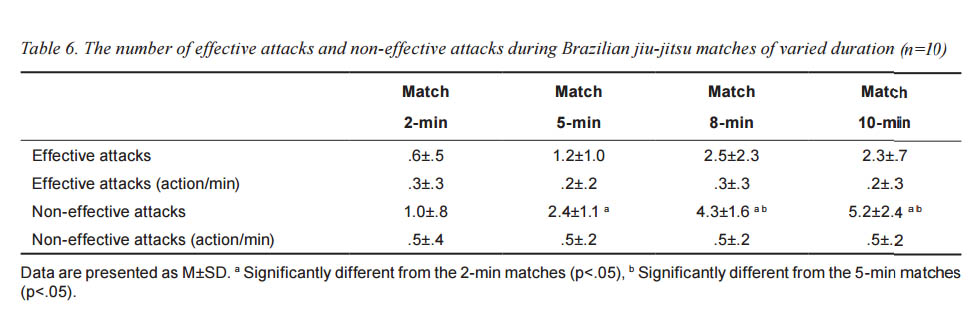
Effective attacks were techniques that generated points or submissions while non effective were ones that generated neither.
In terms of results there were some interesting aspects – the athletes perceived exertion was greater in longer matches even though there was no difference in physical performance!
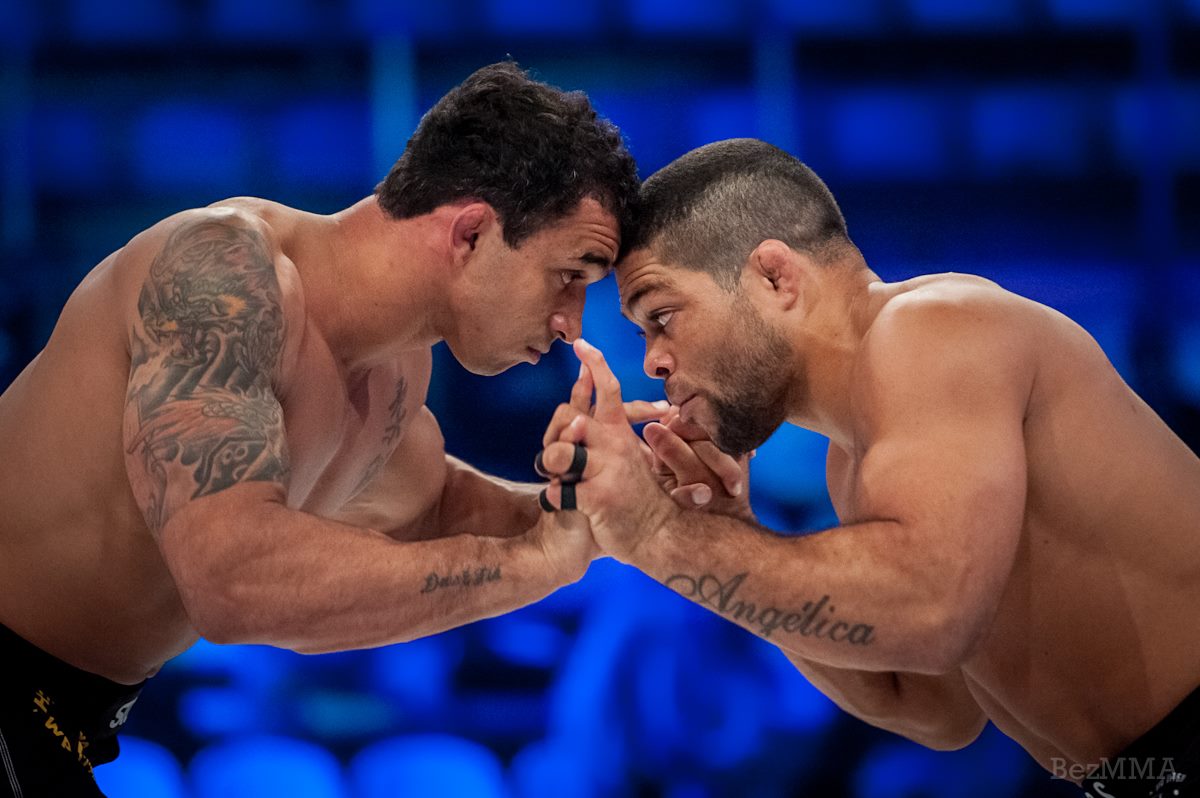
Further the study confirmed physical performance is quite relevant for a demanding combat sport like Brazilian jiu-jitsu.
Grip strength endurance has been suggested to be an important indicator of Brazilian jiu-jitsu performance with maximal handgrip strength decreasing by 80 to 90 percent after combats.
Flexibility plays an important role during matches, especially for the application of technical actions and defensive maneuvers (Vidal-Andreato, et al., 2011).
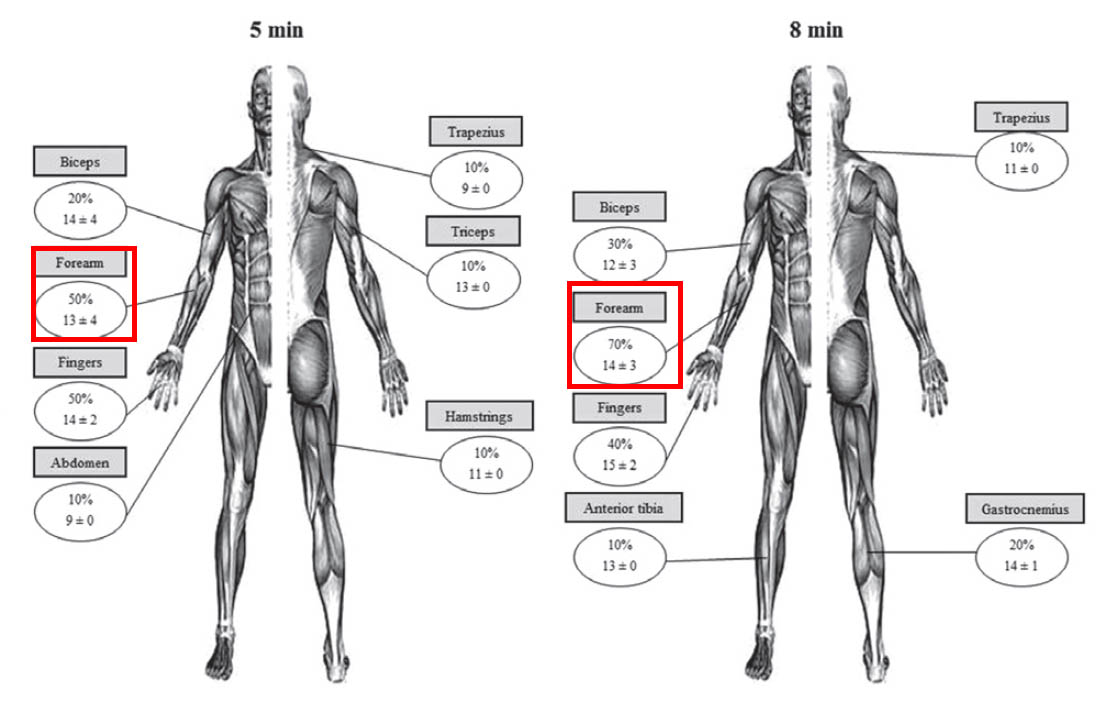
The biggest practical application of this study is relating to grip strength. Indicating a need for exercises aiming to increase muscular endurance in the forearm, where the athletes indicated a greater perception of fatigue.
Sloth Jiu-Jitsu: you can be slow and unathletic and still kick butt in Jiu-Jitsu.

BJJEE
Source link
#Scientific #Study #Study #Grip #Strength #Powerful #Biomarker #Health #Mortality #Risk